
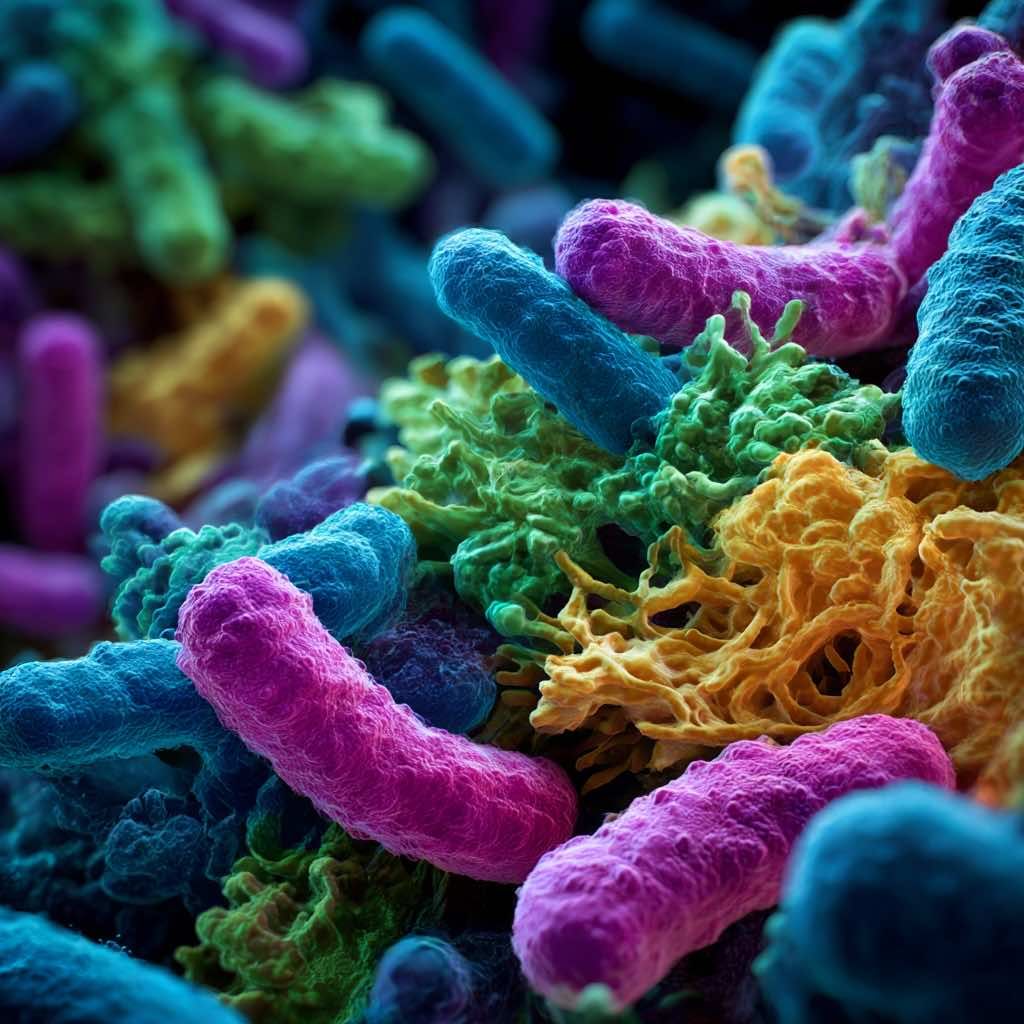
For millions of people living with cystic fibrosis and other chronic lung diseases, bacterial infections represent a constant, life-threatening battle. These aren't ordinary infections that clear up with a simple course of antibiotics. Instead, they're caused by sophisticated, drug-resistant bacteria that have learned to outsmart our most powerful medicines, forming protective shields called biofilms that make them nearly impossible to eliminate.
But what if there was a way to harness one of nature's oldest antimicrobial agents—silver—in a completely new form that could be safely inhaled directly into the lungs? That's exactly what researchers at EVOQ Bio, a division of EVOQ, have been working toward, and they've achieved a major milestone that brings this novel treatment significantly closer to reality.
Preparing for the path ahead: FDA pre-IND meeting provides key guidance
EVOQ Bio recently completed a crucial Pre-Investigational New Drug (pre-IND) meeting with the U.S. Food and Drug Administration, receiving positive feedback on the development plan for an inhaled therapeutic designed to combat antibiotic-resistant pulmonary infections. This meeting represents far more than a regulatory checkbox—it's a validation of years of scientific research and a clear pathway forward to human clinical trials.
The pre-IND meeting process allows companies to present their research data and proposed clinical trial designs to the FDA before formally submitting an Investigational New Drug application. Think of it as a dress rehearsal where the FDA can provide guidance, ask critical questions, and help ensure that upcoming clinical trials will be both safe and scientifically sound. The positive response from the agency means EVOQ Bio's approach has passed this important scrutiny and can now advance toward Phase I clinical trials with confidence.
Understanding the enemy: Why these infections are so dangerous
To appreciate the significance of this advance, it's essential to understand the unique challenges posed by chronic lung infections, particularly in patients with cystic fibrosis. Cystic fibrosis is a genetic disorder that affects approximately 40,000 people in the United States and 100,000 worldwide. The disease causes the body to produce abnormally thick, sticky mucus that accumulates in the lungs and other organs.
This mucus creates the perfect environment for bacteria to thrive. Unlike typical respiratory infections that come and go, these bacterial colonies take up permanent residence in the lungs, forming complex communities called biofilms. Imagine a bacterial city with its own protective walls—that's essentially what a biofilm is. These structures are incredibly difficult to penetrate with traditional antibiotics, allowing the bacteria to persist and multiply while causing ongoing inflammation and lung damage.
The bacteria involved aren't garden-variety microorganisms either. They include notorious drug-resistant pathogens like Pseudomonas aeruginosa, methicillin-resistant Staphylococcus aureus (MRSA), and various species of Burkholderia. These organisms have evolved sophisticated resistance mechanisms, making them increasingly difficult to treat with existing antibiotics. As resistance develops, patients find themselves with fewer and fewer treatment options, and the infections become progressively more dangerous.
The challenge of antibiotic resistance
The problem extends far beyond cystic fibrosis. Antimicrobial resistance has been identified by the World Health Organization as one of the top 10 global public health threats facing humanity. Each year, drug-resistant infections kill approximately 1.2 million people worldwide, and this number is projected to rise dramatically if new solutions aren't developed.
The overuse and misuse of antibiotics has accelerated the evolution of resistant bacteria. When antibiotics are used, they kill susceptible bacteria but may leave behind those with natural resistance. These survivors multiply and pass their resistance genes to other bacteria, creating populations that are increasingly difficult to treat. It's a classic example of evolutionary pressure in action, but one with devastating consequences for human health.
Traditional approaches to this problem have focused on developing new antibiotics, but bacteria consistently develop resistance to these new drugs as well. This has led researchers to explore alternative antimicrobial strategies, including the use of metals like silver that have been known for their antibacterial properties for centuries.
Silver: An ancient solution with modern challenges
Silver has been used as an antimicrobial agent for thousands of years. Ancient civilizations stored water in silver vessels to prevent contamination, and silver compounds have been used medically since the late 1800s. The metal works by disrupting multiple cellular processes in bacteria simultaneously, making it much harder for them to develop resistance compared to traditional antibiotics that typically target a single pathway.
However, silver-based treatments have faced significant limitations. Traditional silver metamaterials release ions, which are responsible for the antimicrobial effect but also cause toxicity to human cells. This has severely limited their therapeutic applications, particularly for treatments that need to be used repeatedly or in sensitive areas like the lungs.
EVQ-218: Reimagining silver for safe therapeutic use
This is where EVOQ Bio's advance becomes truly remarkable, as its proprietary metamaterial, EVQ-218, represents what researchers and scientists describe as a "new form of silver." EVQ-218 is the first and only non-ionic silver metamaterial that maintains powerful antimicrobial activity without the associated toxicity.
The key development lies in the metamaterial's unique structure and behavior. Unlike traditional silver metamaterials that work by releasing toxic ions, EVQ-218 exerts its antimicrobial effects through different mechanisms that don't rely on ion release. This fundamental difference eliminates the toxicity concerns that have plagued previous silver-based therapeutics while maintaining (and in some cases enhancing) the antimicrobial potency.
The implications of this advancement are profound. For the first time, it may be possible to harness silver's broad-spectrum antimicrobial properties in a form that can be safely inhaled directly into the lungs, delivering high concentrations of the active agent precisely where it's needed most.
Impressive laboratory results
The preclinical data supporting EVQ-218 is compelling. In laboratory studies, the metamaterial demonstrated broad-spectrum activity, successfully killing 64 different strains from nine types of drug-resistant bacteria. This list reads like a who's who of problematic pathogens: Pseudomonas, Burkholderia, methicillin-sensitive and methicillin-resistant Staphylococcus aureus, nontuberculous mycobacteria, Achromobacter, Stenotrophomonas, Candida, and Scedosporium.
Perhaps even more impressive is EVQ-218's ability to combat biofilms (those protective bacterial communities that make chronic infections so difficult to treat). The metamaterial showed efficacy against 14 different biofilms tested, suggesting it can penetrate these defensive structures and eliminate the bacteria within.
The safety profile is equally encouraging. Studies in lung epithelial cells (the type of cells that line the airways) showed no toxicity. This is crucial for an inhaled therapeutic that will come into direct contact with lung tissue. Additionally, there were no observable negative changes in tissue structure (histopathologic findings) in animal studies, further supporting the safety profile.
One of the most promising findings relates to resistance development. During 28 days of testing, bacteria showed no signs of developing resistance to EVQ-218. To put this in perspective, bacteria typically develop resistance to conventional antibiotics within 4-5 days under similar testing conditions. This suggests that EVQ-218's mechanism of action may be fundamentally different from traditional antimicrobials, making it much harder for bacteria to adapt and survive.
Support from the Cystic Fibrosis Foundation
The potential of this technology hasn't gone unnoticed by the medical community. The Cystic Fibrosis Foundation, a leading organization in funding research for this devastating disease, awarded EVOQ Bio two grants to support the development and testing of its inhaled therapeutic. This backing represents more than just financial support—it's an endorsement from experts who understand the urgent need for new treatments and the scientific merit of EVOQ Bio's approach.
Looking toward clinical trials
With FDA guidance in hand and strong preclinical data supporting its approach, EVOQ Bio is now positioned to advance EVQ-218 toward human clinical trials. Phase I trials will focus primarily on safety, carefully evaluating how the inhaled metamaterial behaves in human lungs and determining appropriate dosing.
If successful, subsequent trials will evaluate efficacy, testing whether EVQ-218 can actually clear infections and improve outcomes for patients with cystic fibrosis and other chronic lung diseases. This process will likely take several years, but the foundation has been carefully laid through years of preclinical research and development.
A new chapter in antimicrobial therapy
The development of EVQ-218 represents more than just another potential treatment option. It embodies a fundamentally different approach to combating antimicrobial resistance, one that leverages ancient wisdom about silver's antimicrobial properties while employing cutting-edge metamaterial science to overcome historical limitations.
For patients and families affected by cystic fibrosis and other chronic lung diseases, this research offers something increasingly rare in the era of antimicrobial resistance: genuine hope. While challenges undoubtedly remain as EVQ-218 moves through clinical development, the strong preclinical foundation and regulatory support suggest that this novel therapy may indeed represent a significant advance in our ability to combat drug-resistant infections.