
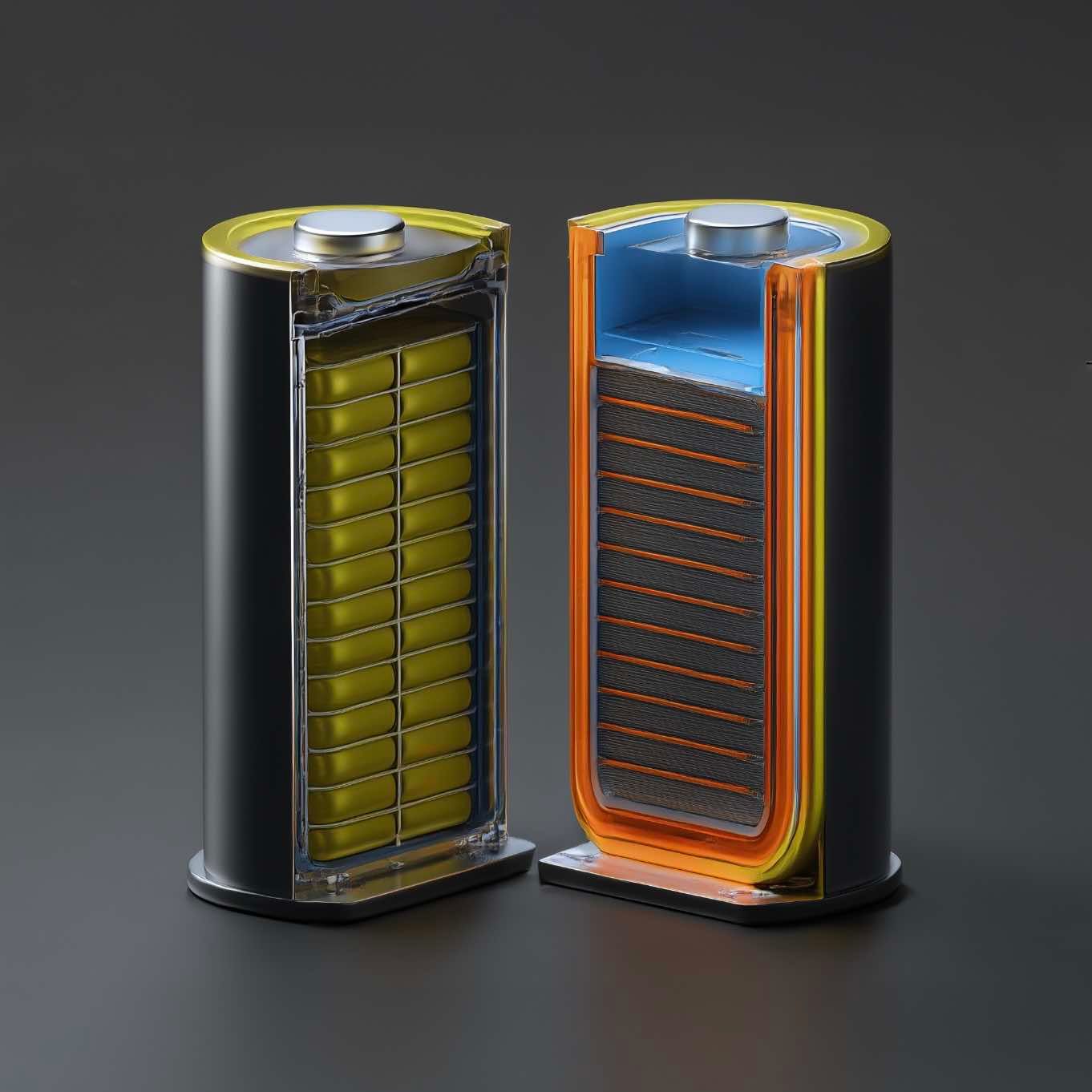
Lead-acid batteries have been a cornerstone of energy storage for over 150 years, powering applications ranging from automotive systems to renewable energy grids. Despite their reliability and low cost, these batteries face persistent challenges: limited lifespan, corrosion at the grid interface, and safety risks such as swelling or explosions due to internal failures. These issues not only compromise performance but also contribute to environmental burdens through frequent battery replacement and resource depletion. A novel approach using gold metamaterial, produced via a patented cross-laser ablation method developed by EVOQ, promises to transform this technology by enhancing both existing and new batteries. This article explores how metamaterial from EVOQ improves battery performance, promotes sustainability, and enhances safety, offering a global win for energy storage.
Gold metamaterial as nucleation sites
The Attostat™ method developed by EVOQ employs high-energy laser ablation and electromagnetic fields to produce uniform gold metamaterial, typically sub-10 nanometers in size. These smooth, spherical particles enter the battery's electrolyte or paste, acting as nucleation sites for lead sulfate (PbSO₄) crystal formation during charge-discharge cycles. In traditional lead-acid batteries, Classical Nucleation Theory (CNT) indicates that PbSO₄ crystals form through random monomer collisions, often resulting in large, irregular crystals (up to micrometers in size). These large crystals reduce efficiency, increase corrosion, and limit cycle life.
Gold metamaterial from EVOQ provide pre-existing seeds, eliminating the need for random collisions and lowering the Gibbs free energy barrier for nucleation. This process yields smaller, more uniform PbSO₄ crystals, typically 125-300 nm in size, as confirmed by Scanning Transmission Electron Microscopy (STEM) and Electron Diffraction Spectroscopy (EDS). With approximately 14.5 × 10¹⁴ particles per liter in a 1 mg/L solution, these nucleation sites deplete supersaturation effectively, creating a porous, stable crystal matrix at the grid-active material interface.
Rejuvenation and restoration of existing batteries
This incredible metamaterial technology shines in its ability to rejuvenate aging lead-acid batteries. Over time, sulfation causes large PbSO₄ crystals to accumulate on electrodes, reducing capacity and charge acceptance. Introducing gold metamaterial from EVOQ into the electrolyte shifts this dynamic. The metamaterial integrate into the sulfation matrix—shown by STEM/EDS mapping with gold embedded within PbSO₄ crystals—and encourage smaller crystal formation during subsequent cycles. This breaks down oversized crystals, restores porosity, and boosts ion transport.
Electrochemical Impedance Spectroscopy (EIS) data show a 700% increase in effective capacitance after five hours of cycling with gold metamaterial, compared to controls. This indicates that the technology halts degradation and partially reverses it, extending the life of batteries in service. For industries like telecommunications or off-grid solar systems, this translates to fewer replacements, lower maintenance costs, and a reduced environmental footprint.
Advantages for new battery designs
For newly manufactured batteries, EVOQ delivers significant performance and durability gains. Key benefits include:
- Enhanced discharge utilization and charge acceptance : More nucleation sites improve active material conversion, enabling higher power delivery and faster recharging, which is vital for electric vehicles (EVs) and grid storage.
- Higher energy density and longer life : The porous crystal structure increases storage capacity and reduces electrode stress, doubling or tripling cycle life. EIS data from the Warburg circuit model confirm a higher dielectric constant, reflecting deep metamaterial integration in the electroactive layer.
- Corrosion reduction : Smaller, uniform crystals minimize corrosion at the grid interface, a common failure mode (PCL1, antimony-free effect). This enhances reliability and reduces risks of short circuits or thermal runaway.
These advancements position lead-acid batteries as a stronger competitor to lithium-ion options, especially in cost-sensitive markets, while leveraging existing manufacturing infrastructure. With both cost and availability considerations taken into account, this could revise current thinking about energy storage costs.
A global win with sustainability and safety in mind
EVOQ tackles global challenges beyond performance. By rejuvenating existing batteries and enhancing new ones, gold metamaterial from EVOQ cut demand for raw materials like lead, sulfuric acid, and antimony. A single milligram of gold—yielding trillions of metamaterial—treats a liter of electrolyte, ensuring resource efficiency. Fewer new batteries reduce mining, energy use in production, and waste, supporting circular economy principles and climate goals.
Safety also improves significantly. Lead-acid batteries risk catastrophic failure from swelling, expansion, or explosions due to gas buildup and corrosion-induced shorts. EVOQ mitigates these dangers through metamaterial-induced crystal uniformity and reduced corrosion. Smaller crystals form a stable matrix, less prone to collapse or gas entrapment, while lower corrosion decreases internal fault risks. This results in safer batteries for homes, vehicles, and industrial use, protecting users and the environment.
Looking to the future
Integrating this technology into lead-acid batteries offers a transformative opportunity. For existing batteries, it provides cost-effective restoration; for new ones, it boosts performance without major redesigns. Globally, it fosters a sustainable energy storage ecosystem by extending battery life, conserving resources, and enhancing safety.
Further research continues to optimize metamaterial concentrations, study long-term cycling effects, and scale the technology across battery types. Current research is very promising as similar principles can be applied to many other battery types. Early lithium-ion battery tests show promising improvements as well.
EVOQ ushers in a new era for lead-acid batteries, merging advanced metamaterial with a proven system. By tackling sulfation, corrosion, and safety issues, it boosts efficiency, longevity, and reliability. Its dual ability to rejuvenate existing batteries and enhance new ones offers a practical path to sustainable energy storage. As resource scarcity and environmental challenges grow, this technology proves that small particles can spark big change.