1. Abstract
Novel production methods of sub 10 nanometer noble metal nanoparticles using high energy industrial methods possess group and individual properties that affect the nucleation conditions of electroactive species in lead acid batteries. Smooth sphere particles stay suspended in electrolyte, artificially increasing crystal numbers formed. Increased numbers change the charge density, rates of formation/deformation, and final size of the crystals. This is in harmony with CNT (classic nucleation theory) parameters. Predetermining critical size crystals with the presence of narrow size distributed seed nanoparticles changes conditions where Gibbs Helmholtz energy equations and concentrations are replaced by the known nanoparticle seed size. Nucleation rates increase with the nanoparticles present causing several predictable changes through the CNT model. Incorporation to battery paste and electrolyte results in greater predictable stability and corrosion reduction, leading to preferable design changes that increase efficiency/value in lead acid energy storage and use. Fabrication Ion Beam Scanning Electron Microscopy, Scanning Transmission Electron Microscopy, and high-resolution Electron Diffraction Spectroscopy mapping provides results of crystal formation behavior. Electron Impedance Spectroscopy shows the increase in charge density and the softness of the electroactive species using a Warburg model.
Keywords : Nanoparticles, Impedimetric, Granularization, Corrosion, Sphere, Nucleation.
2. Classic nucleation theory with presence of nanoparticles
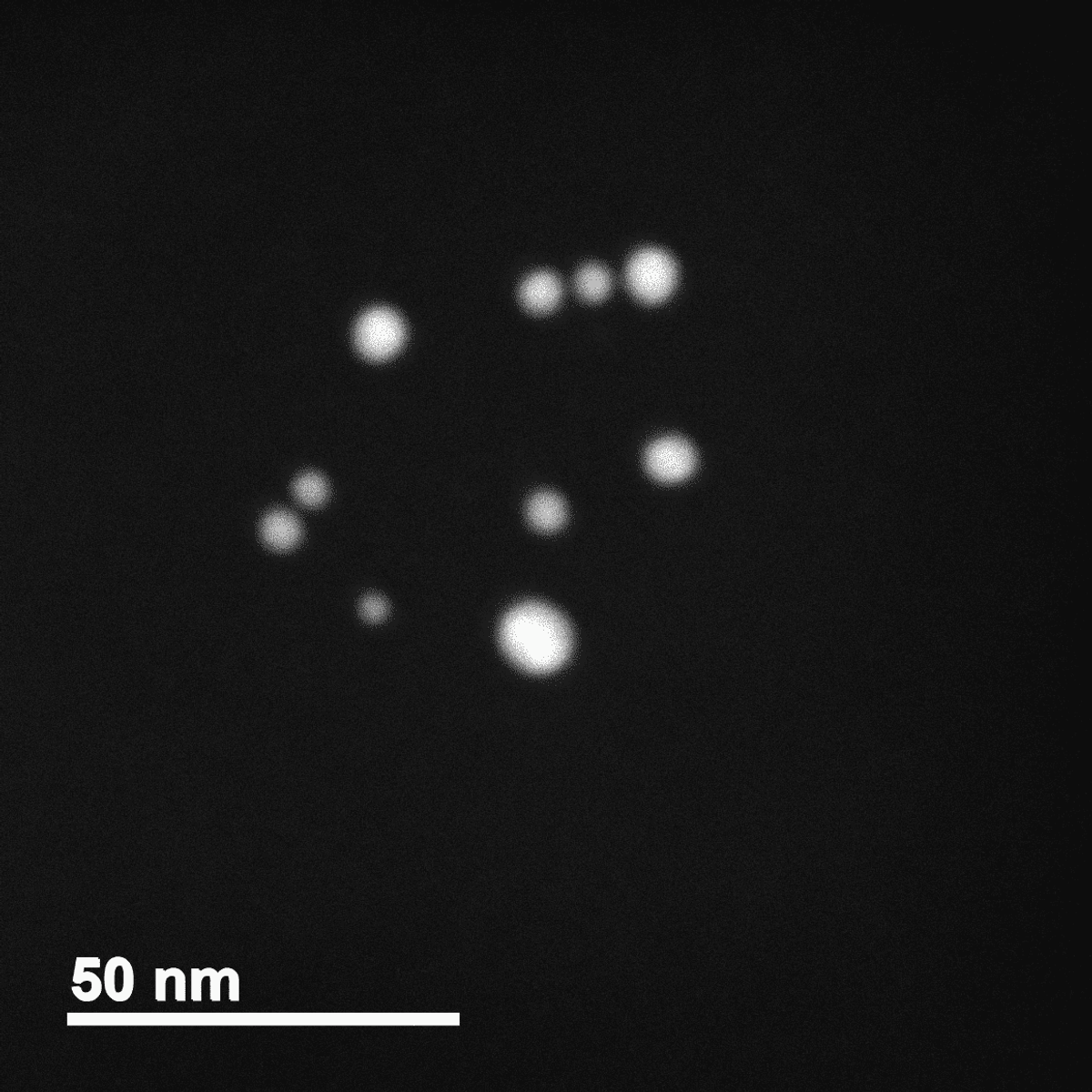
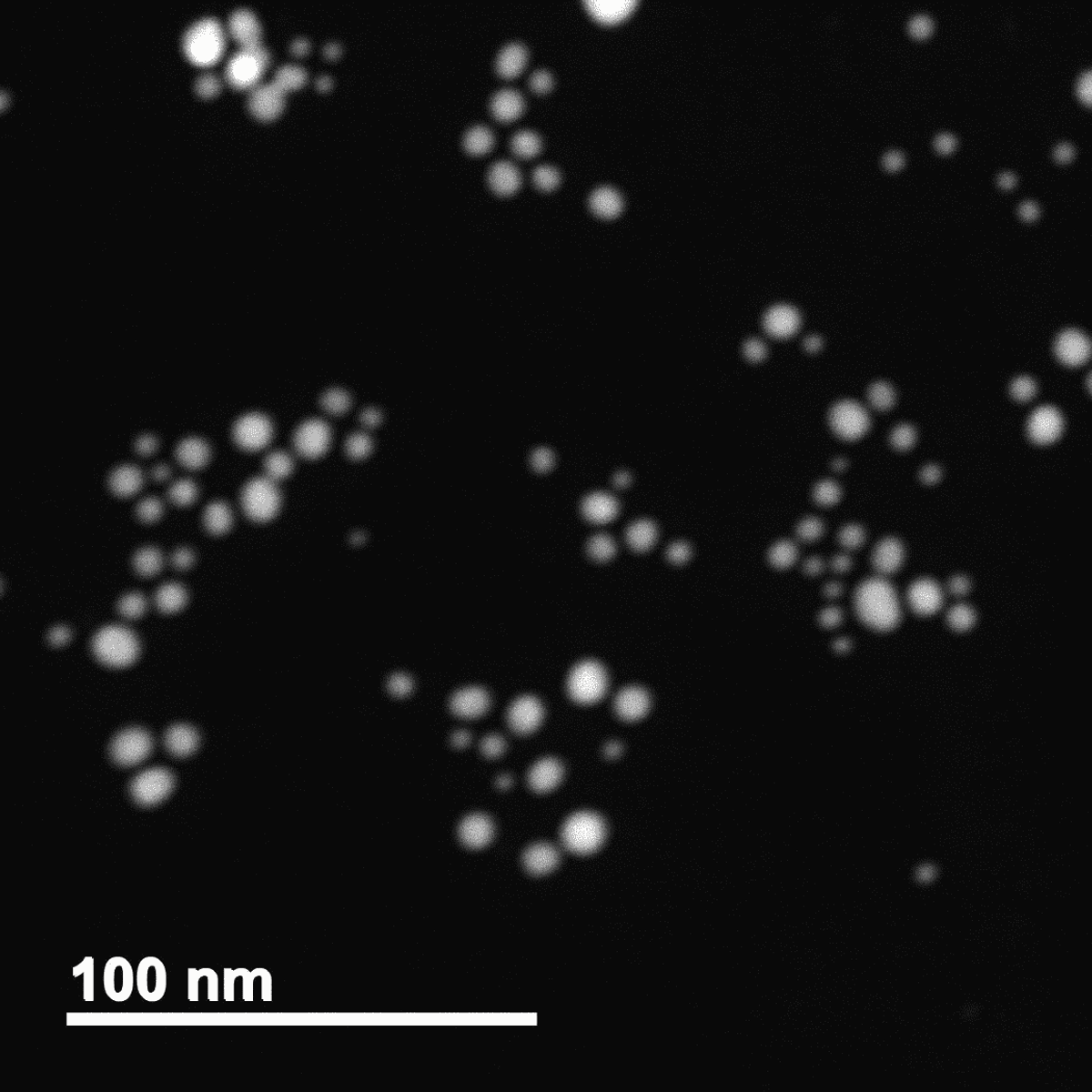
Gold nanoparticles produced by the Attostat™ method, using a primary Q-switched laser ablation and subsequent electromagnetic fields during particle formation, efficiently produce uniform spheres in high orders of magnitude and very narrow size distribution (See Figure 1a and 1b). The number of particles present is calculated by digesting the gold nanoparticles in solution with Aqua Regia and using Inductive Coupled Plasma Optical Emission Spectrophotometry (ICPOES) for a concentration of mass of the particles. To find the number of atoms per particle, a unit model of four atoms with a volume of 0.0679 cubic nm for gold is used. A 10 nanometer sphere is approximately 524 units with a single unit containing four atoms in relation to a face-centered cubic model of crystalline gold. Rounding to 2,100 atoms per nanoparticle, one milligram of gold is 5.1 × 10⁻⁶ moles or 3.05 × 10¹⁸ atoms. Dividing the atoms per particle into the atoms of 1 milligram of gold, a 1 mg/L solution of gold 10 nanometer particles is approximately 14.5 × 10¹⁴ particles per liter. Although the structure of the Attostat method particles possesses more atoms at the surface, this model still provides orders of magnitude of particles present for calculating nucleation site influence.
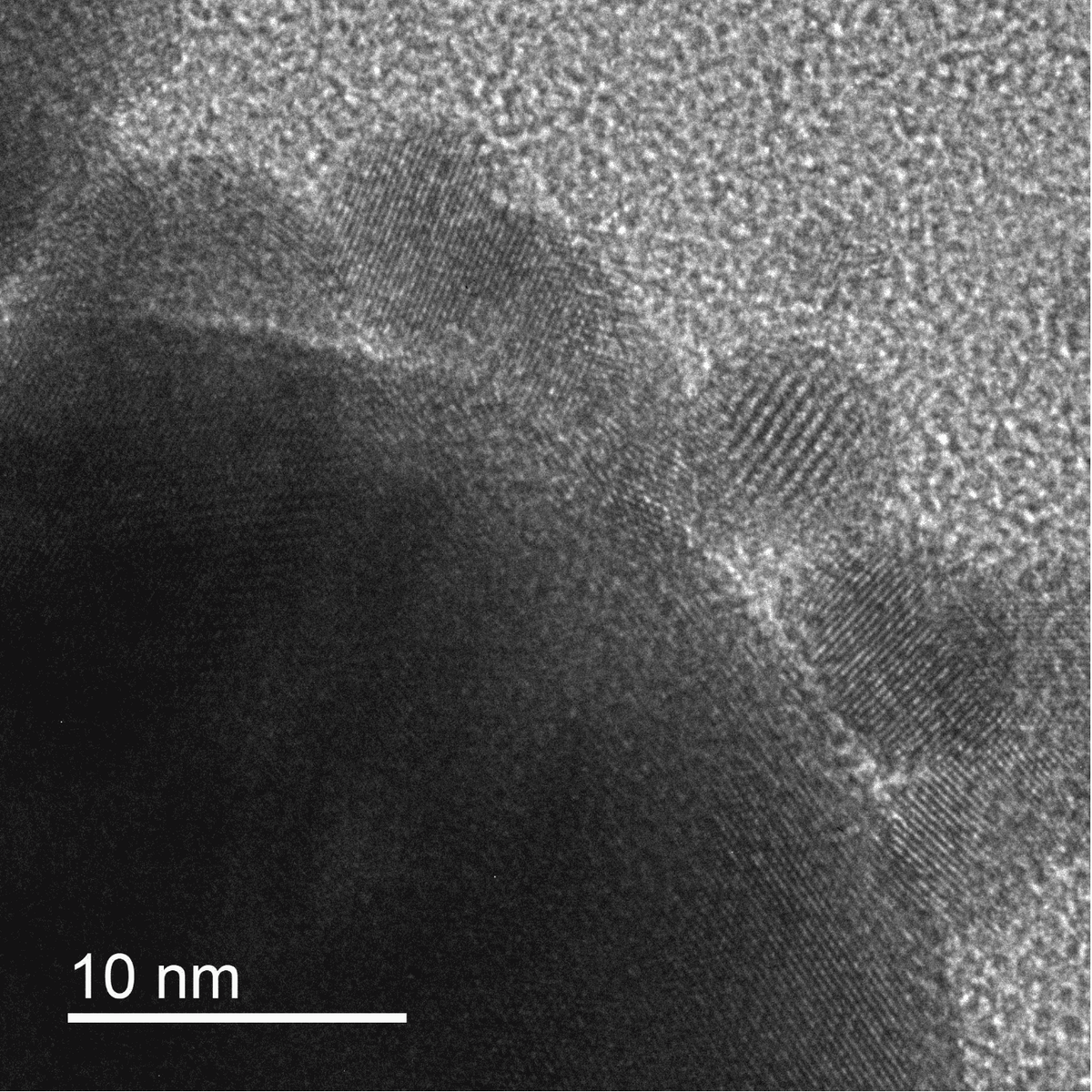
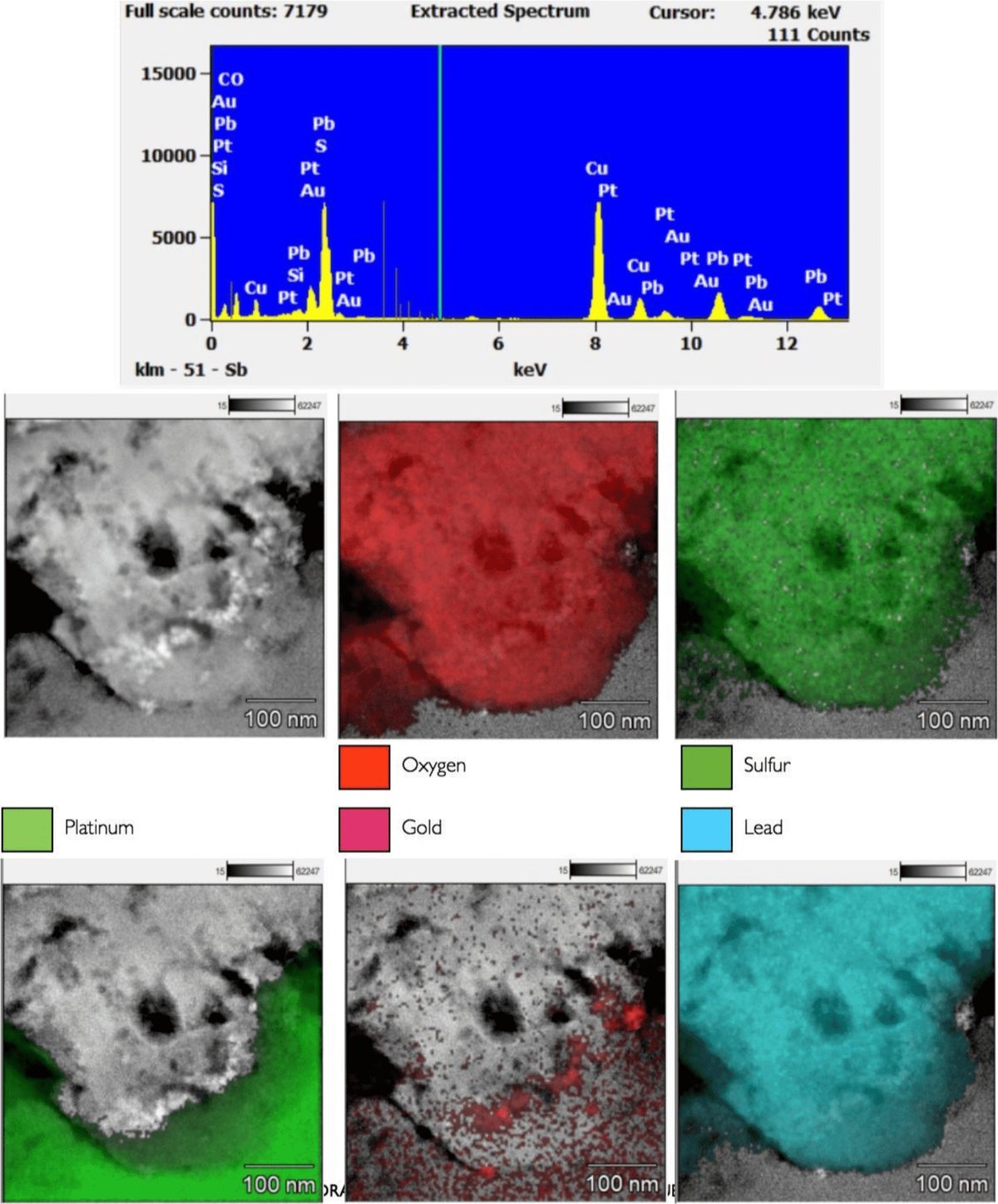
STEM/EDS imaging of a fabrication ion beam extracted cross section from rotation disk electrode (RDE) samples used in a Gamry cell for EIS, DPV, and CV electrochemistry allows for electroactive species to be mapped by elements, providing location of the nanoparticles after formation of crystals (See Figure 2).
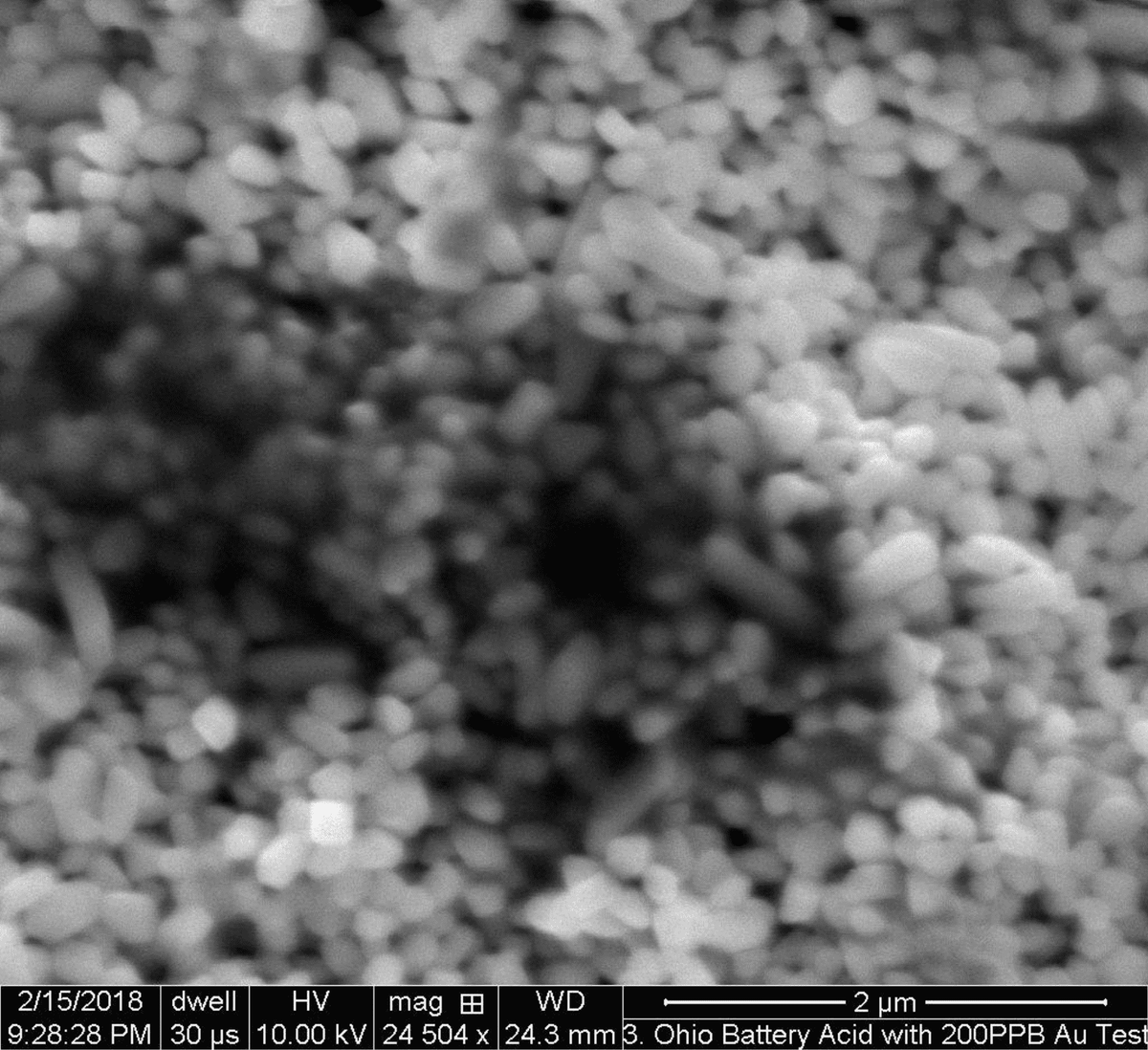
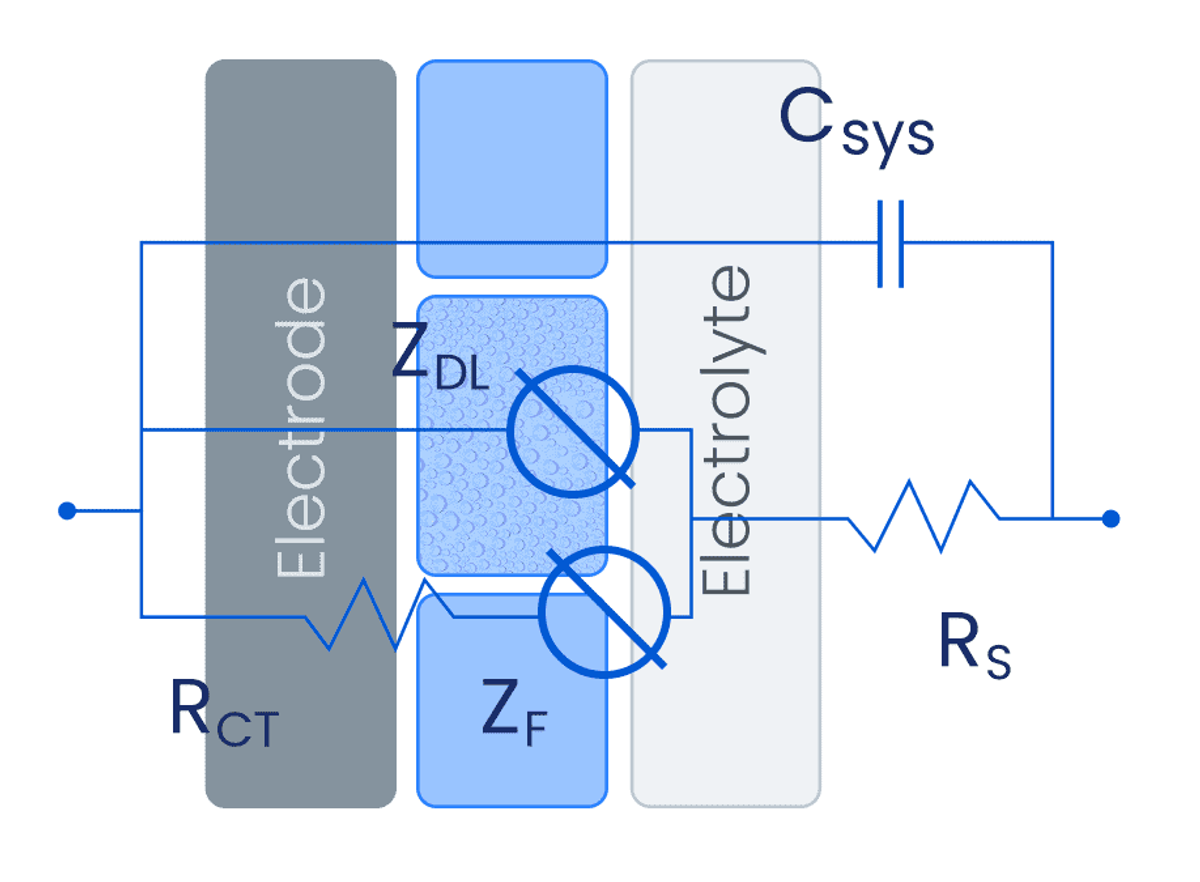
The result of 1 mg/L 2-10 nm nanoparticles present in a Pb+H₂SO₄ solution produces a larger number of crystals than traditional heterogeneous supersaturated fluids. Due to the increased number of nucleation sites provided by the nanoparticles. Pb₂SO₄ crystals produced are smaller 125-300 nanometers (See Figure 3) also due to more nucleation sites available for the saturation conditions and greater number of crystal formations depleting the saturation. Classical Nucleation Theory (CNT) for supersaturated solutions requires monomers that stochastically collide for nucleation genesis. Along with Gibbs free energy equations, thresholds exist where nucleations will start with a critical size crystal formation as well. Both the need for CNT collision model and the energy requirements for the critical particle nucleation size are removed by providing gold nanoparticles as the critical particle size and location to jumpstart the nucleation during charging conditions. The very uniform smaller crystals are structurally stable in the electroactive species layer formed at the grid interface in a Pb H₂SO₄ cell during charging state. The uniform small crystals produced result in the layering structures providing more pores to the grid for consistent reliable cycling of the system. It is noteworthy, with nanoparticles present in the electrolyte, more consistent charge and discharge in comparison to the control of no particles present is observed. EIS data trends in the effective capacitance of the Warburg circuit model (See Figure 4) indicates that the nanoparticles are absorbed within the sulfation matrix with increased dielectric constant, not just absorbed on the surface which would have minimal capacitance effect. Effective capacitance of the system is 700% greater with the gold nanoparticles than without. STEM EDS mapping concludes this is the case with the gold nanoparticles readily seen within the electroactive species of the cross section RDE surface extracted (See Figure 5) by fabrication ion beam scanning electron microscope.
There are numerous ways that lead acid batteries can degrade and fail in service: PCL1 (antimony-free effect), PCL2 (shedding) and PCL3 (negative expander degradation), among others. Causes and effects of these are summarized by Pavlov (ref.1), with references therein to previous work done worldwide by others. PCL1 is minimized historically by use of Sn or Ag in the grid alloy, and/or by phosphoric acid in the paste or electrolyte. This report describes a novel alternative approach, which employs a small mass of gold nanoparticles. However, this mass is represented numerically by the presence of overwhelming, individual, discrete, stable, particles due to individual size (<10 nm). The efficacy of these nanoparticles in the paste is being studied, as well. Furthermore, additional results, conclusions, and recommendations are shown in the LABAT video for the question/discussion period. It is shown that Au nanoparticles in the electrolyte are an effective adjunct or alternate to other materials, and processes to reduce and delay PCL1 failure.
3. Equations
Gibbs free energy formation classical expression
The radius r, when very small, results in a positive initial ( ΔG ). When the critical radius is achieved the ( ΔG ) is maximized. By differentiating Eq. (1) and setting to 0 the critical radius is calculated as.
As saturation increases the size of the critical crystal is lowered as well as the accompanying energy barrier ( ΔG ). By setting the ( r crit ) around the gold nanoparticle size the ( ΔG ) can be lowered as well as reducing the stochastic collision requirements of monomers and saturation conditions. A steady state distribution of critical size crystal condensation rates can be expressed by rate of formation ( J Cl ).
4. Figures
5. Tables
Table 1. EIS effective capacitance of the electroactive species reactance with and without gold nanoparticles.
Sulfation | Control Z DL =>C eff | 1ppm AuNP | C eff % Increase |
|---|---|---|---|
Mixed (invariant) | 45μF | 60μF | +33% |
Porous (0hr) | 17μF | 21μF | +24% |
Porous (2hr) | 34μF | 151μF | +344% |
Porous (5hr) | 76μF | 608μF | +700% |
6. Conclusions
The presence of gold (10 nanometers and smaller) nanoparticles improve discharge utilization, charge acceptance, energy density and life. Au nanoparticles provide more nucleation sites at the grid-active material interface, producing smaller, more numerous PbSO₄ crystals. These smaller crystals allow a more porous interface corrosion layer, thereby allowing a higher rate and higher energy density discharge. These also provide a reduced energy barrier to corrosion layer deformation. STEM/EDS imaging shows the gold nanoparticles are indeed inside the PbSO₄ crystals formed at the interface and not merely on the grid alloy surface. Increased consistency and reduction of undesired over-condensations of mixed ion species also reduces corrosion in PCL1.
References
[1] D. Pavlov, Lead-Acid Batteries , 1st Ed. (2011) p 15, 179, Wlsevier, New York