Executive Summary
Batteries are vital to modern technology but struggle with issues like limited energy density, short cycle life, and safety concerns. EVQ-GA Polymorphic Sphere Nanoparticles provide a transformative solution by optimizing crystal chemistry and improving charge transfer. This results in up to a 70% increase in effective capacity and greater stability for both lead-acid and lithium-ion batteries. This white paper explains how EVQ-GA works and its potential to reshape energy storage, making it a key player in next-generation battery technology.
Introduction
From smartphones to electric vehicles, batteries are essential in today's world. Yet, current battery technologies face serious hurdles. Lead-acid batteries degrade due to crystal deformation and corrosion, while lithium-ion batteries grapple with energy density limits and safety risks from crystal-related failures. These problems cut into efficiency, lifespan, and dependability.
EVQ-GA Polymorphic Sphere Nanoparticles tackle these issues head-on by managing crystal formation at the nanoscale, strengthening battery structure, and boosting charge transfer. This white paper outlines how EVQ-GA transforms battery performance, paving the lateral thinking: way for safer, more efficient energy storage.
Understanding Battery Failure Mechanisms
Lead-Acid Battery Failures
Lead-acid batteries break down when alpha lead oxides form less soluble crystals. These crystals shrink, warping battery plates and disrupting connections. In extreme cases, plates bend enough to pierce the casing, leaking acidic electrolyte. EVQ-GA counters this by limiting harmful crystal growth and reinforcing the positive active material (PAM).
PCL1 Corrosion refers to the formation of alpha lead oxides in lead-acid batteries, which are less soluble and tend to form larger crystals. These crystals can cause physical deformation of the plates, leading to connection failures, or even worse, casing breaches.
Lithium-Ion Battery Challenges
Lithium-ion batteries suffer from crystal formations that can puncture the membranes, causing dangerous failures like fires. This restricts energy density and cycle life. EVQ-GA resolves these issues by refining crystal chemistry, preventing membrane damage, and improving safety and performance.
In lithium-ion batteries, the growth of lithium dendrites can puncture the separator membrane, causing internal short circuits. This can lead to thermal runaway, a rapid increase in temperature that may result in fires or explosions.
By managing crystal formation, EVQ-GA enhances battery materials and structure, supporting reliable electrochemical storage across different battery types.
The Ideal Crystal Chemistry
EVQ-GA improves battery performance by directing crystal formation at the nanoscale. It acts as a guide, shaping crystal growth for a stronger, more efficient battery. Here's how:
- Nucleation Control : EVQ-GA sets a critical radius for crystal nucleation, lowering the energy required for growth. Classical nucleation theory explains how crystals form from a supersaturated solution. It involves the creation of a critical radius, beyond which crystal growth becomes energetically favorable. EVQ-GA nanoparticles provide pre-formed seeds that match this critical radius, reducing the energy barrier for nucleation and promoting uniform crystal growth.
- Uniform Distribution : Its distinct shape ensures even spread in the electrolyte, fostering consistent crystal formation. Sedimentation occurs when particles settle out of the electrolyte, reducing their effectiveness. EVQ-GA's polymorphic sphere shape minimizes sedimentation by enhancing colloidal stability, ensuring the nanoparticles remain dispersed and active throughout the battery's life.
- Optimized Conductivity : Precise EVQ-GA levels increase nucleation sites without forming excess conductive paths, avoiding self-discharge. Unlike traditional conductive additives that create direct conductive paths, potentially leading to self-discharge, EVQ-GA increases conductivity by enhancing the porosity and channel structure within the PAM. This allows for better ion access to the electrode plate without forming continuous conductive channels.
Behavior of Batteries Influenced by EVQ-GA
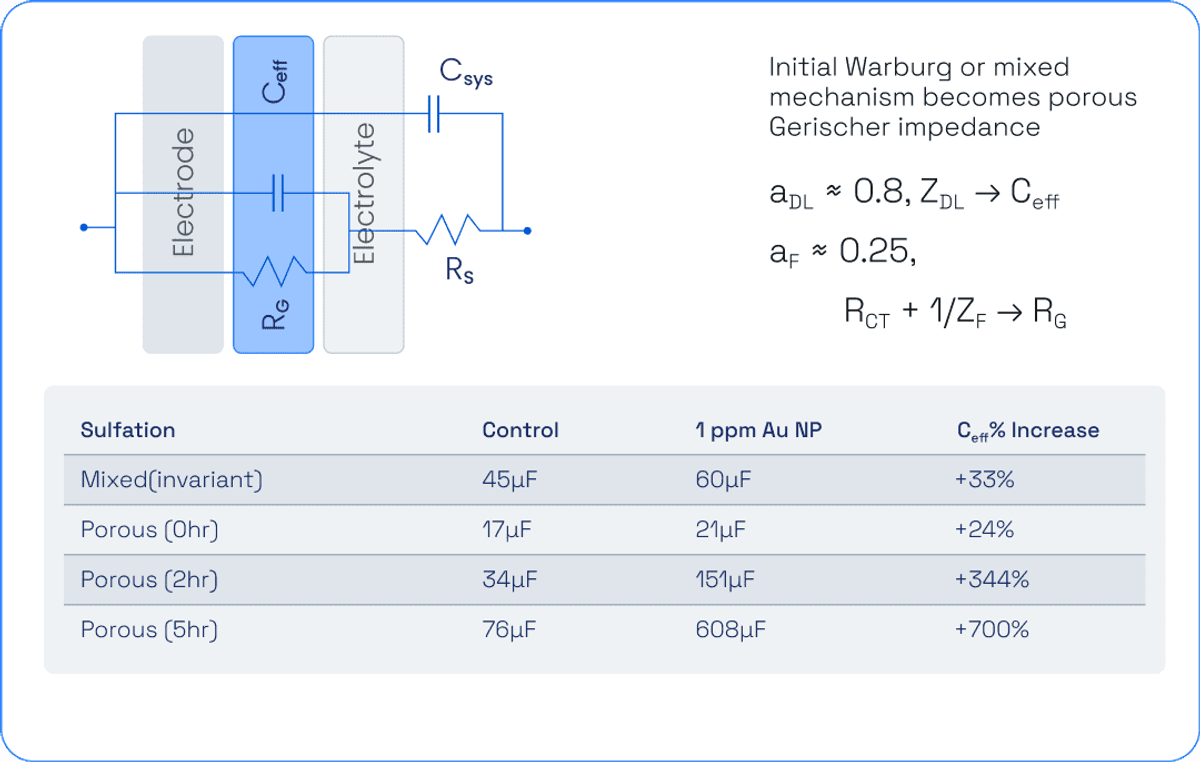
Electron Impedance Spectroscopy (EIS) tests show EVQ-GA markedly enhances battery efficiency. In treated batteries, the PAM displays lower Warburg impedance, which is a sign of better ion diffusion, indicating improved charge transfer.
Key Findings :
- Up to a 700% rise in effective capacity (C_eff) compared to untreated batteries.
- Steady performance gains in lead-acid batteries, backed by third-party tests.
- Comparable improvements in lithium-ion batteries, proving EVQ-GA's broad applicability.
These outcomes highlight EVQ-GA's power to optimize battery behavior and energy storage.
In EIS, Warburg impedance represents diffusion-controlled processes, while Gerischer impedance accounts for reactions involving adsorbed species. The observed reduction in Warburg impedance with EVQ-GA indicates improved ion diffusion, likely due to the optimized pore structure in the PAM.
For lithium-ion batteries, EVQ-GA influences the nucleation of lithium salts in the organic electrolyte, promoting a more stable solid electrolyte interphase (SEI) layer, enhancing cyclic life and safety.
Surface Scan of EVQ-GA Crystal Formation
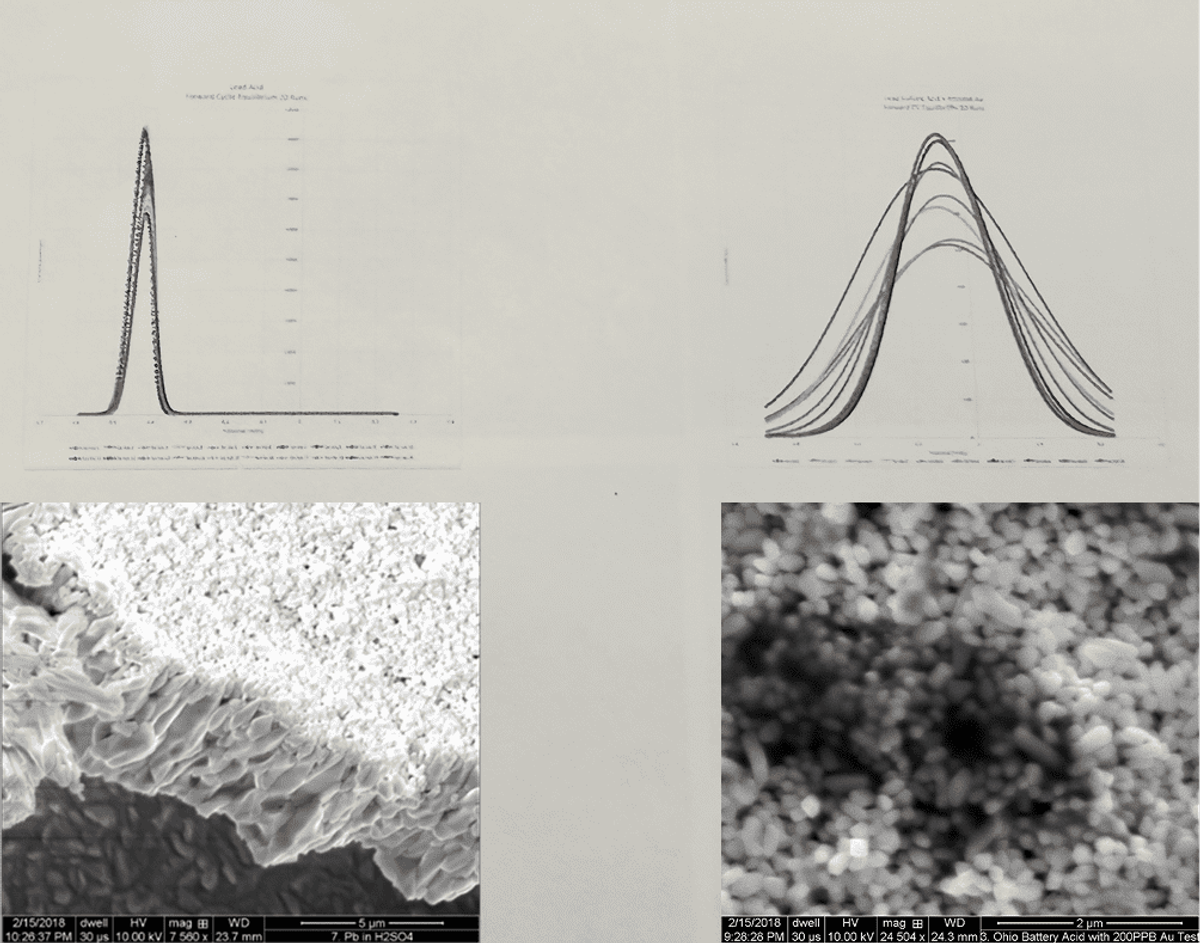
Electron micrographs ([Insert Figure 2 image here]) show that without EVQ-GA, the PAM develops traditional Alpha Lead Oxide under a Beta Lead Oxide layer. With EVQ-GA, Alpha Lead Oxide is reduced, and crystals become smaller and more uniform. This forms pores and channels that improve charge transfer, directly enhancing battery efficiency.
Differential Potential Voltammetry (DPV) is a technique that measures current response to small voltage steps, providing high sensitivity for capacitance measurements. In batteries treated with EVQ-GA, DPV shows increased capacitance, indicating greater energy storage capacity due to the refined crystal structure.
Scanning Transmission Electron Microscopy
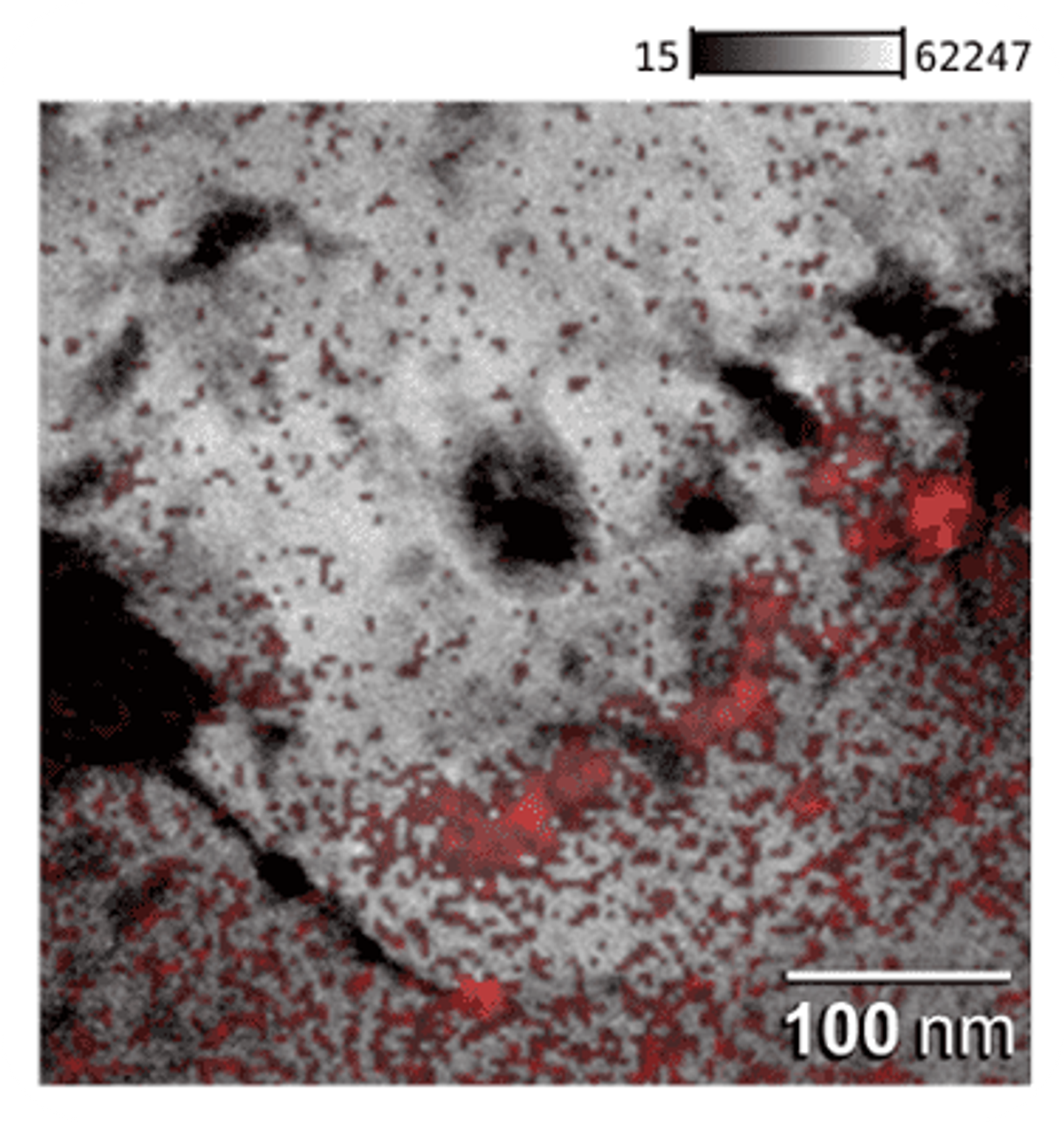
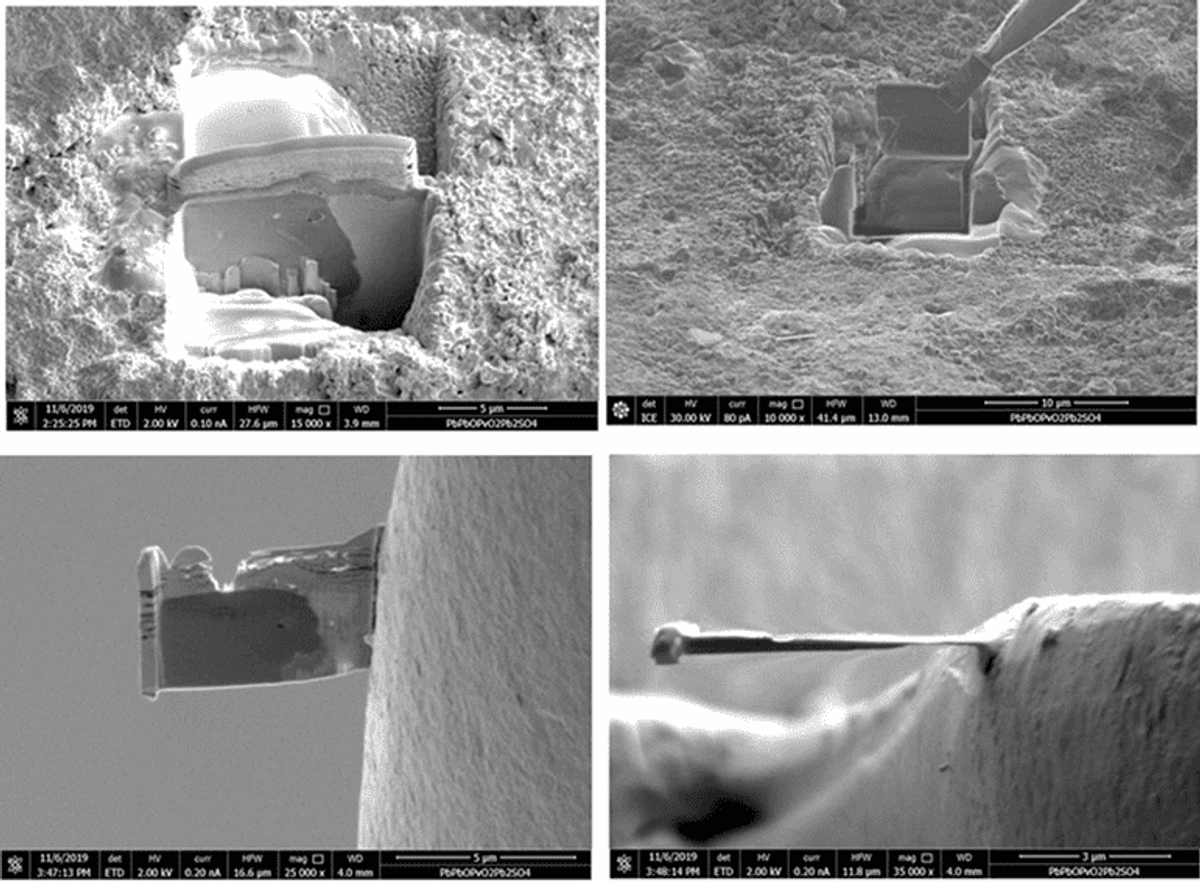
STEM images (See figure 4) verify EVQ-GA particles are evenly spread within the PAM. This consistent distribution is essential for optimizing charge transfer and elevating battery performance.
These visuals confirm EVQ-GA's critical role in refining battery material structure for top-tier results.